
“A Streetcar Named Desire” Travels a New Route—at ACT
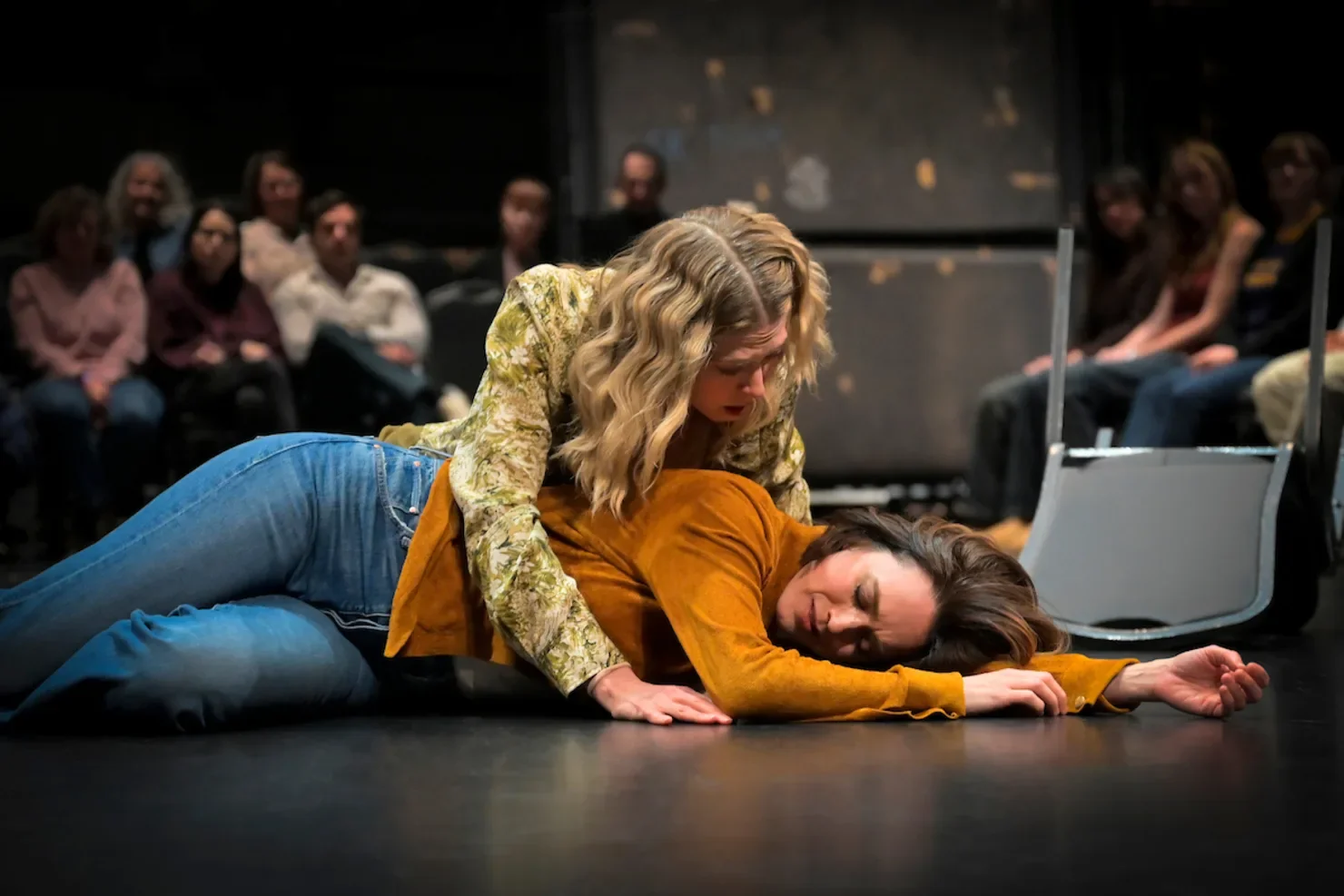
Lucy Owen & Heather Lind. Photos by Kevin Berne
Tennessee Williams’ Classic Dazzles in Stripped Down Staging
by Bruce Kaplan
When a creative team endeavors to reinvent a classic, many minefields pop up as they ponder changes to time and place, staging, and characters. And when that classic is so intimately associated with its locale and characters, like Tennessee Williams’ “A Streetcar Named Desire” is identified with post-WWII New Orleans, those minefields get risky.
Lucy Owen and Nick Westrate’s “Streetcar Project” asks if Blanche DuBois' descent into madness can be told effectively on an empty stage with only four actors in a 1,000-seat theater. By stripping the production of its visual guideposts—the crowded French Quarter apartment, all set pieces and props—the result elevates Williams' heart-shattering dialogue, and the actors performing it, to carry the story.
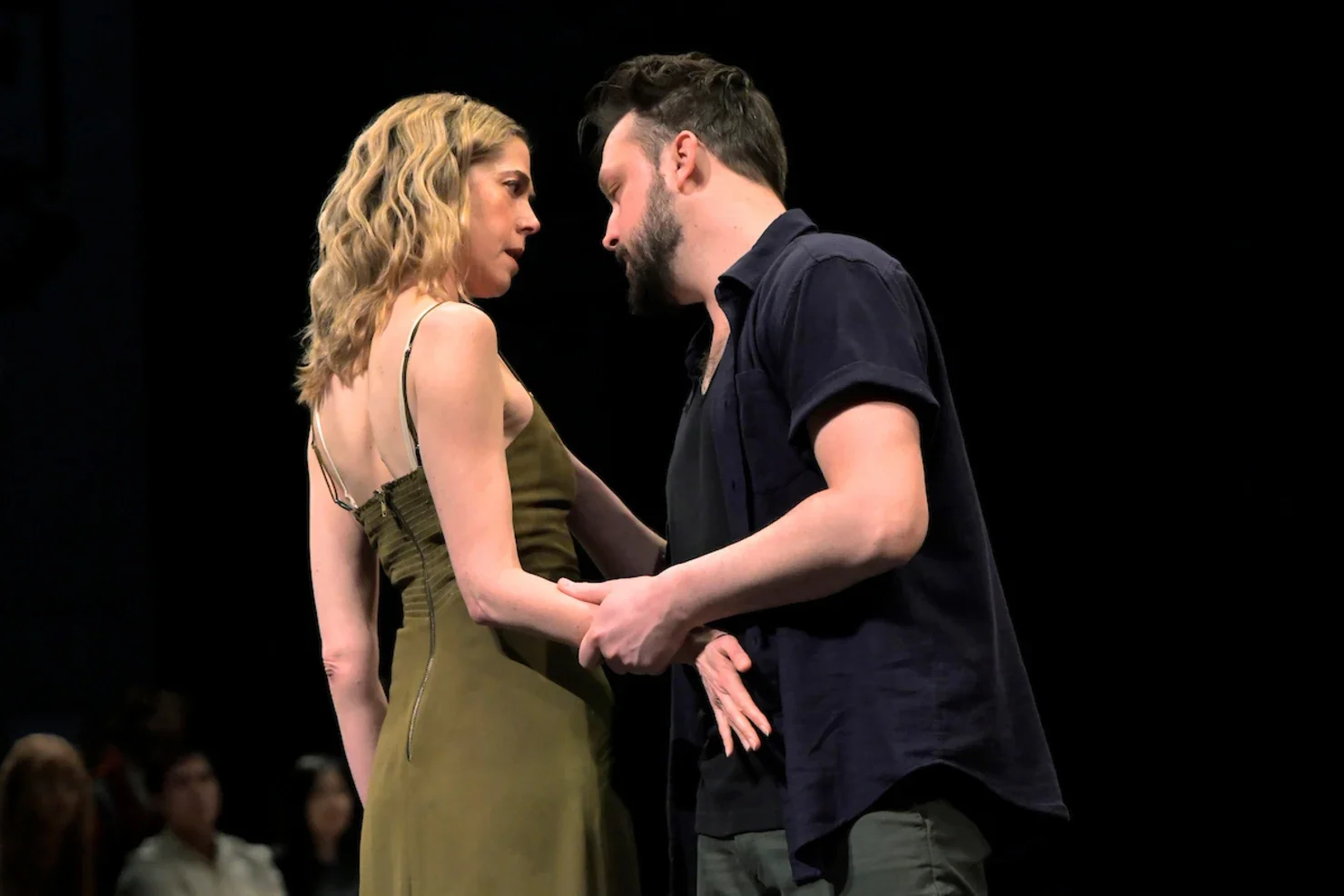
Lucy Owen & Brad Koed. Photos: Kevin Berne
But by stripping the Southern dialect from the characters, the production may do a disservice to Williams's characters, especially Blanche. As a born-and-bred descendant of white Southern privilege, a refugee from an earlier time who doggedly clings to her heritage, wouldn’t Blanche also cling to her genteel manner of speaking?
Lucy Owen portrays Blanche as more grounded than the traditional drawling, victimized Southern woman. Owen’s Blanche strides the wide stage with strength and grace. Her Blanche is more "actor" than "acted upon.” In 1947, Southern women had very few good choices to go it alone. Blanche loses Belle Reve, the family estate, to lawyers and confusion. When her lies and incompetence are unmasked, she finally surrenders to the darkness she's been repressing for so long.
The rest of the cast of four also navigate their roles with intensity and determination. As Stella, Heather Lind lays bare her need for her older sister’s acceptance, despite how their paths have diverged. Her prolonged scream of "Blanchhhhhe!" as her sister makes her final exit hauntingly mirrors Stanley's earlier "Stellaaaa!" in its neediness.
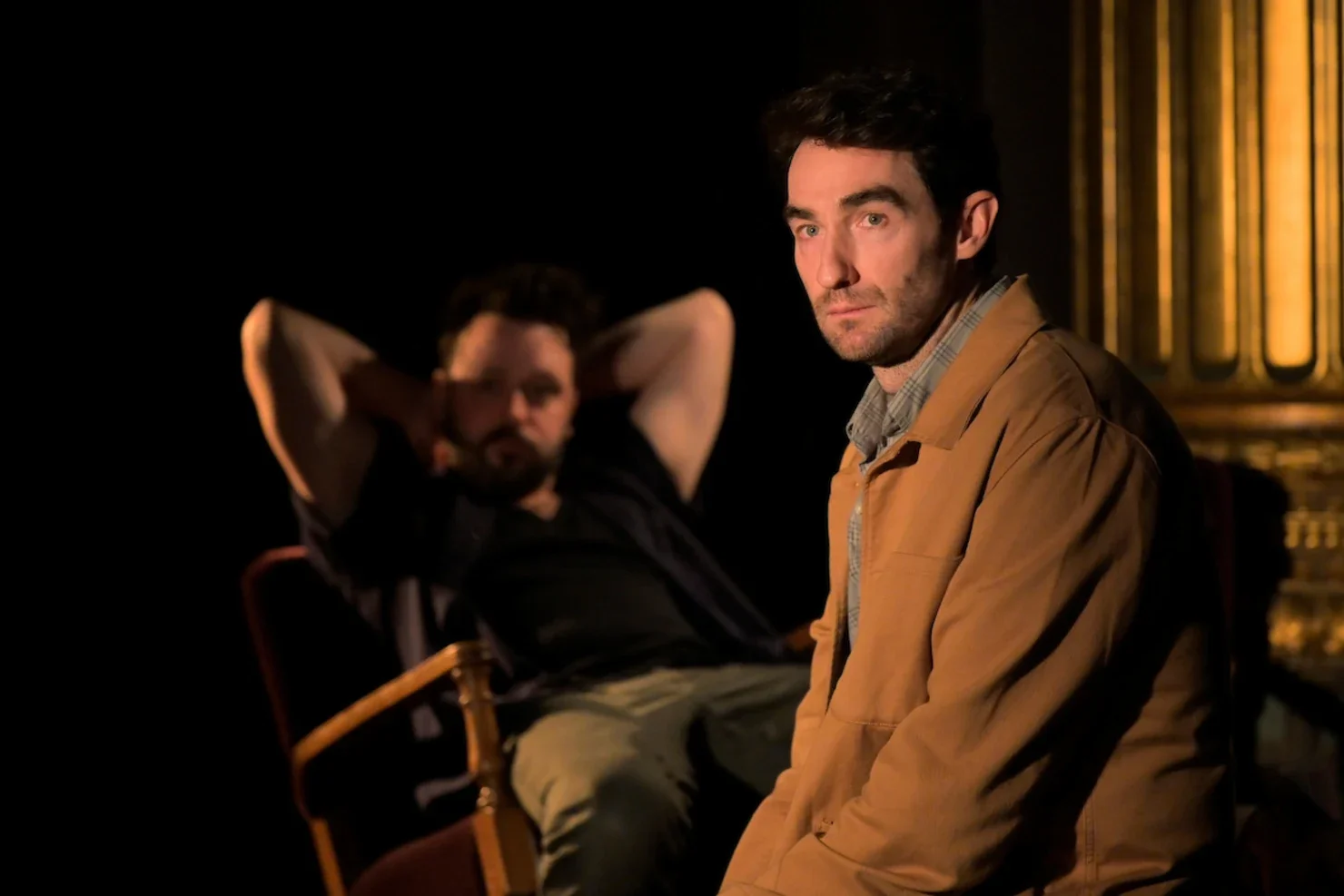
Brad Koed & James Russell
Brad Koed captures Stanley's rough explosiveness in the symbolic language the production uses to represent many physical actions, including drinking and talking on the phone. Stanley’s rape of Blanche is depicted primarily with striking lighting, with the characters lit from below, casting oversized shadows that emphasize the power dynamic between Stanley and Blanche.
James Russell portrays Mitch with believable pathos and longing, a sad and sympathetic character. Russell also gets big laughs as upstairs neighbor Eunice—an unexpectedly light touch at the start of the show.
The sparseness of the staging overall makes light and sound central to telling the story. Scenic design by Director Westrate meets the challenge with lighting and sound that convey outsized importance in understanding the action without props.
ACT’s Toni Rembe Theater is the first actual theater in which this production has been performed. In such a large performance space, the experiment works well to highlight Williams's razor-sharp dialogue; but the loss of so much visual context from the lack of a set or props makes it harder for this “Streetcar” to draw the audience deeply into the lives of its characters.
For veteran “Streetcar” admirers, this is a curious but worthy experiment in storytelling; for first timers, a more classic interpretation is probably a better introduction to the full impact of this monumental play.
“A Streetcar Named Desire” by Tennessee Williams, created by Lucy Owen & Nick Westrate, directed by Nick Westrate, by The Streetcar Project, at ACT, San Francisco.
Info: act-sf.org – to February 1, 2026.
Cast: Lucy Owen, Heather Lind, Brad Koed, and James Russell.