
“The Piano & Me” Thrills with Immigrant Heroism—at TheatreWorks
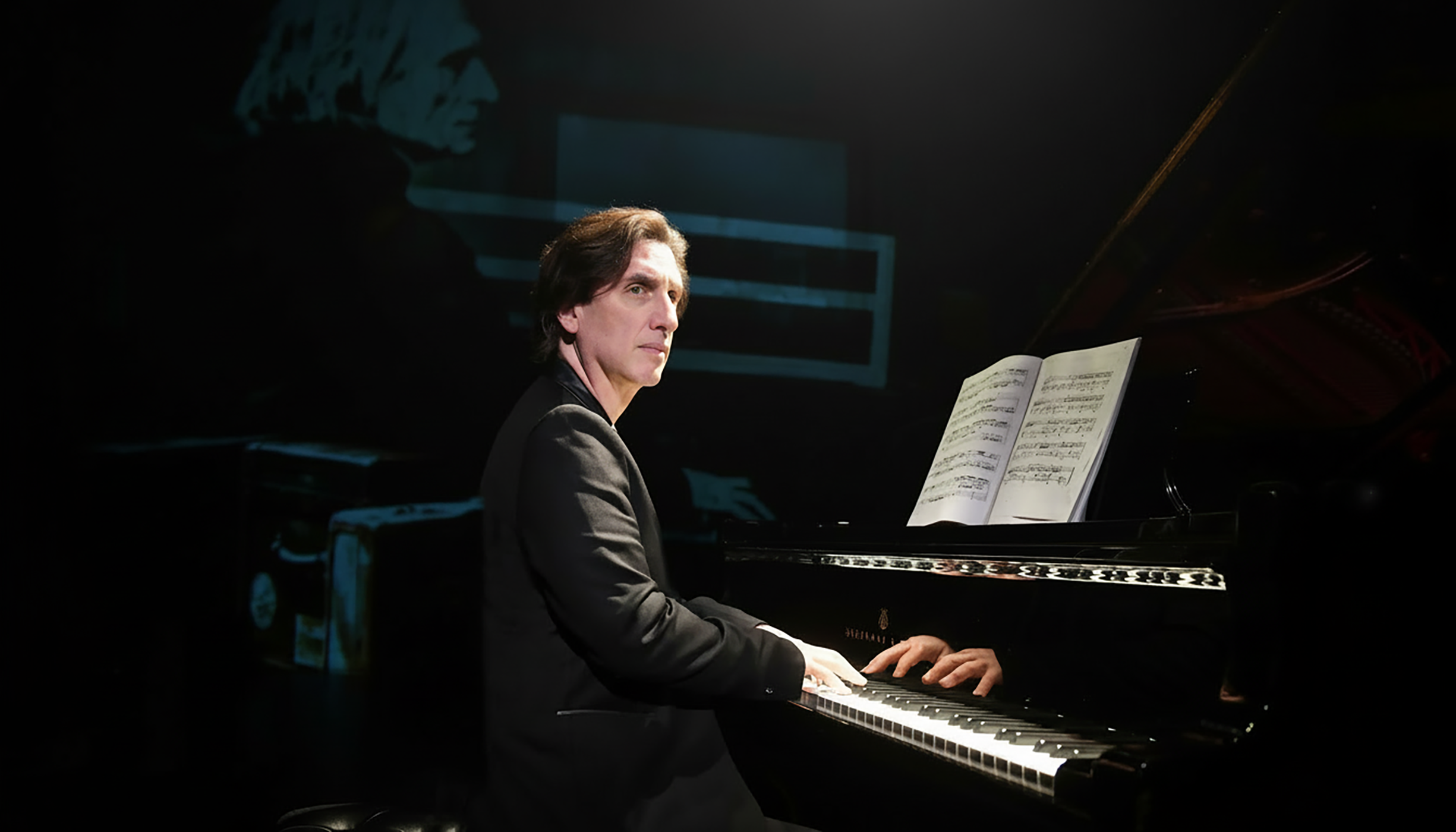
Hershey Felder. Photo by David Lepori
Hershey Felder Becomes Hershey Supreme Onstage!
by Mary Lou Herlihy
As we read with horror about our American immigrant neighbors being terrorized, detained, and “DISAPPEARED,” powerful stories like Hershey Felder’s remind us that we are on a knife’s edge.
Since 2000, Hershey Felder has researched and performed musical portraits of great composers. Coming full circle, Felder unpacks his own immigrant journey.
In “The Piano & Me,” Felder, the consummate storyteller and pianist, charts his early life, performing and describing treasured musical milestones. Guiding us through the Yiddish cabbage-scented kitchens of his Montreal childhood, Felder touchingly portrays the people who shaped him.
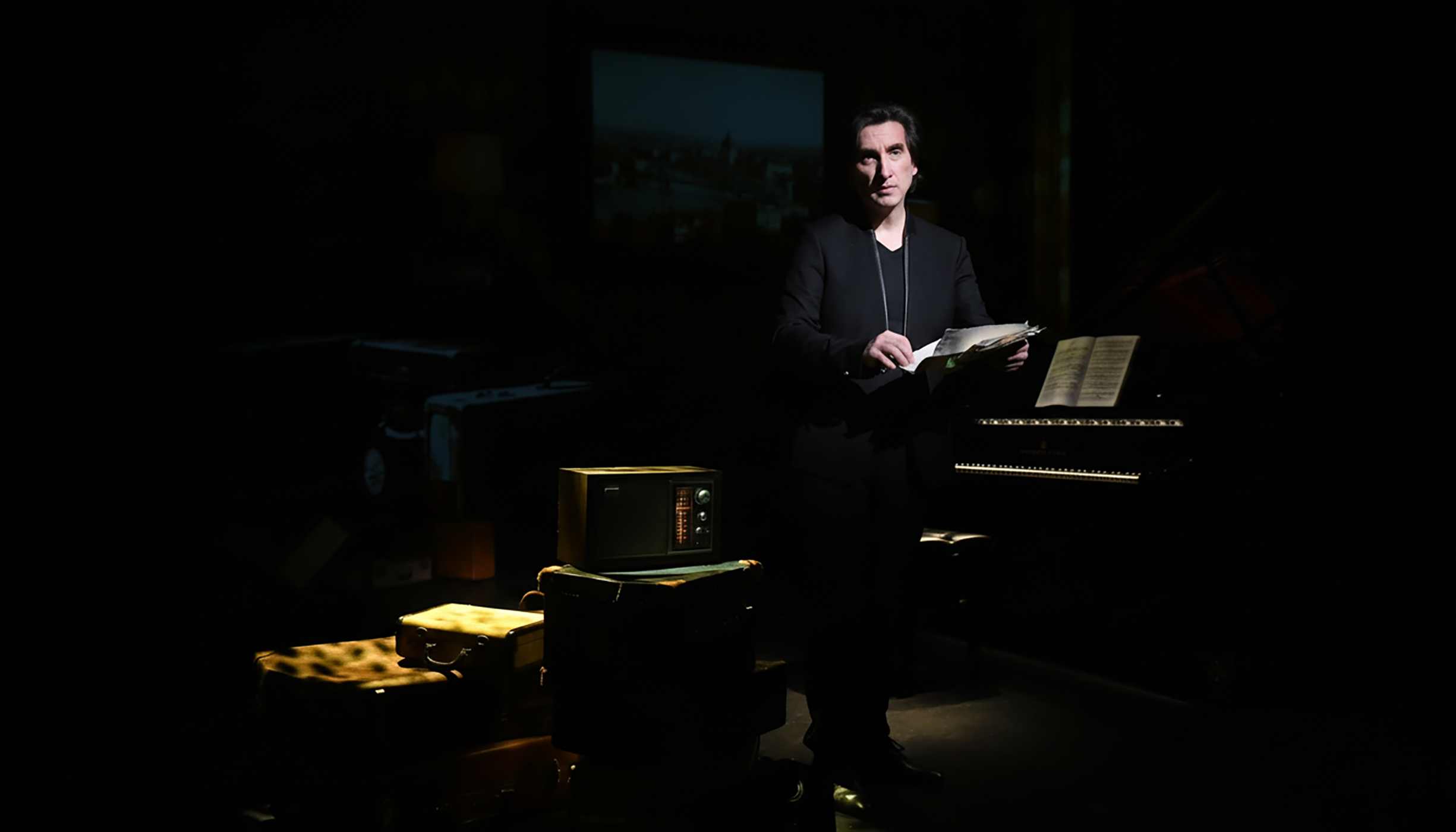
Hershey Felder. Photo by David Lepori
From the Montreal ghetto to transformative years at Juilliard in New York, Felder discovers his family’s shadowed past in Nazi Germany.
Felder’s doting grandfather recognizes the boy’s talents early and suddenly, a piano appears. At six, Felder falls in love with Bach’s “Well-Tempered Clavier.” “The notes were like a painting,” Felder says, “and playing them came easily.” He astounds his first piano teacher by playing the score from memory. He retains music after hearing it on the radio. Mesmerized by Mozart’s “Turkish March,” Felder races to the piano to get the notes under his fingers.
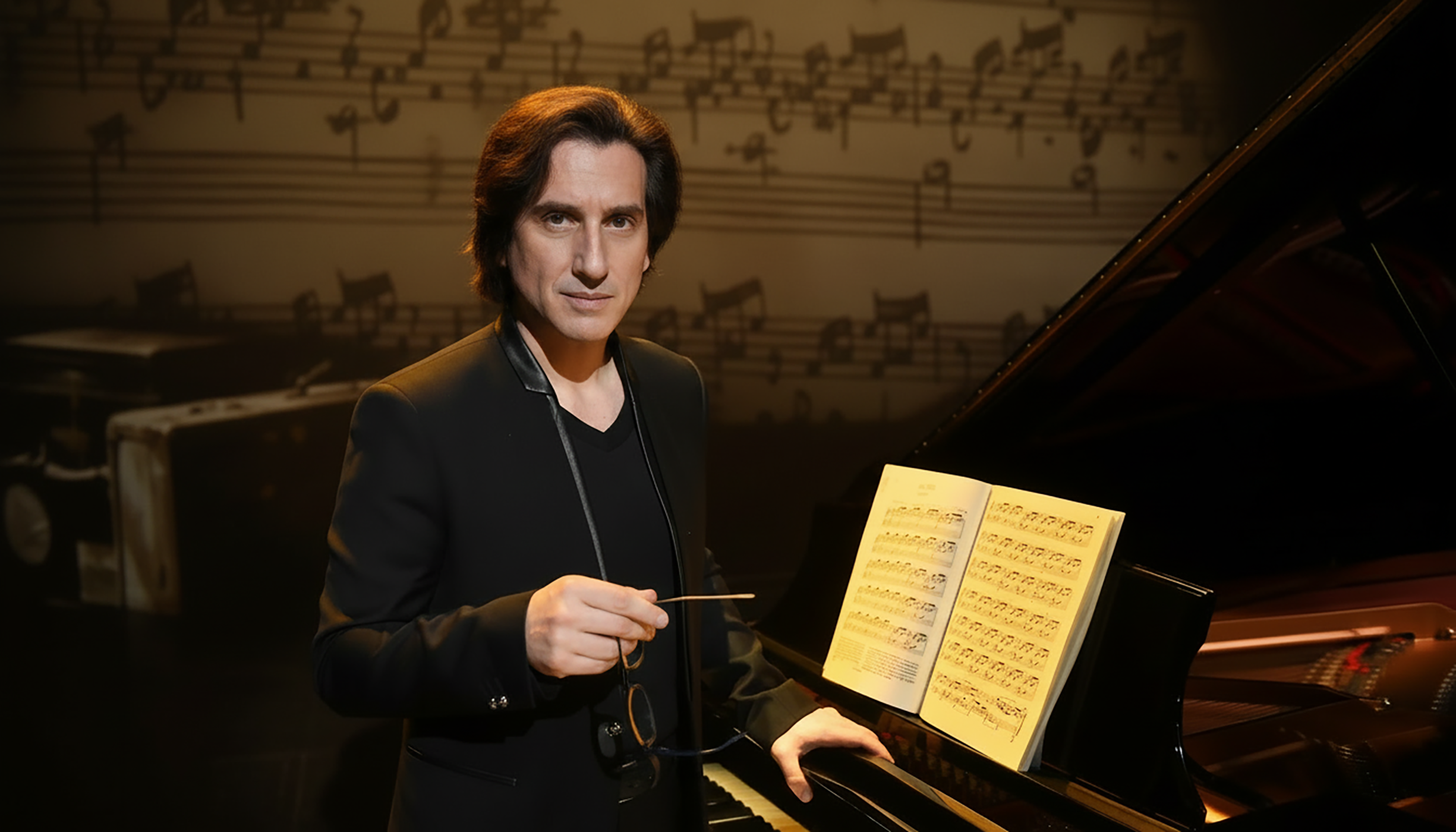
Hershey Felder. Photo by David Lepori
By degrees, Felder’s story connects to eastern Europe and his family’s narrow escape from the Nazis—and some are lost. Recalling his childhood, Felder digs through an ancient suitcase and finds a letter from 1943, addressed to his beloved grandfather: “NO NEWS about your daughter.” When Felder asks about the letter and the packed suitcase, he’s told that “you must always be ready to flee if they come for us.” People of color know this fear!
The piano provides distraction and solace from a childhood cut short by his mother’s illness. After her passing at a tragically young age, Felder learns that the music of Bartok comforts his mother’s bereft parents. The haunting Hungarian folk music brings back lost stories of countless “DISAPPEARED” relatives from Budapest.
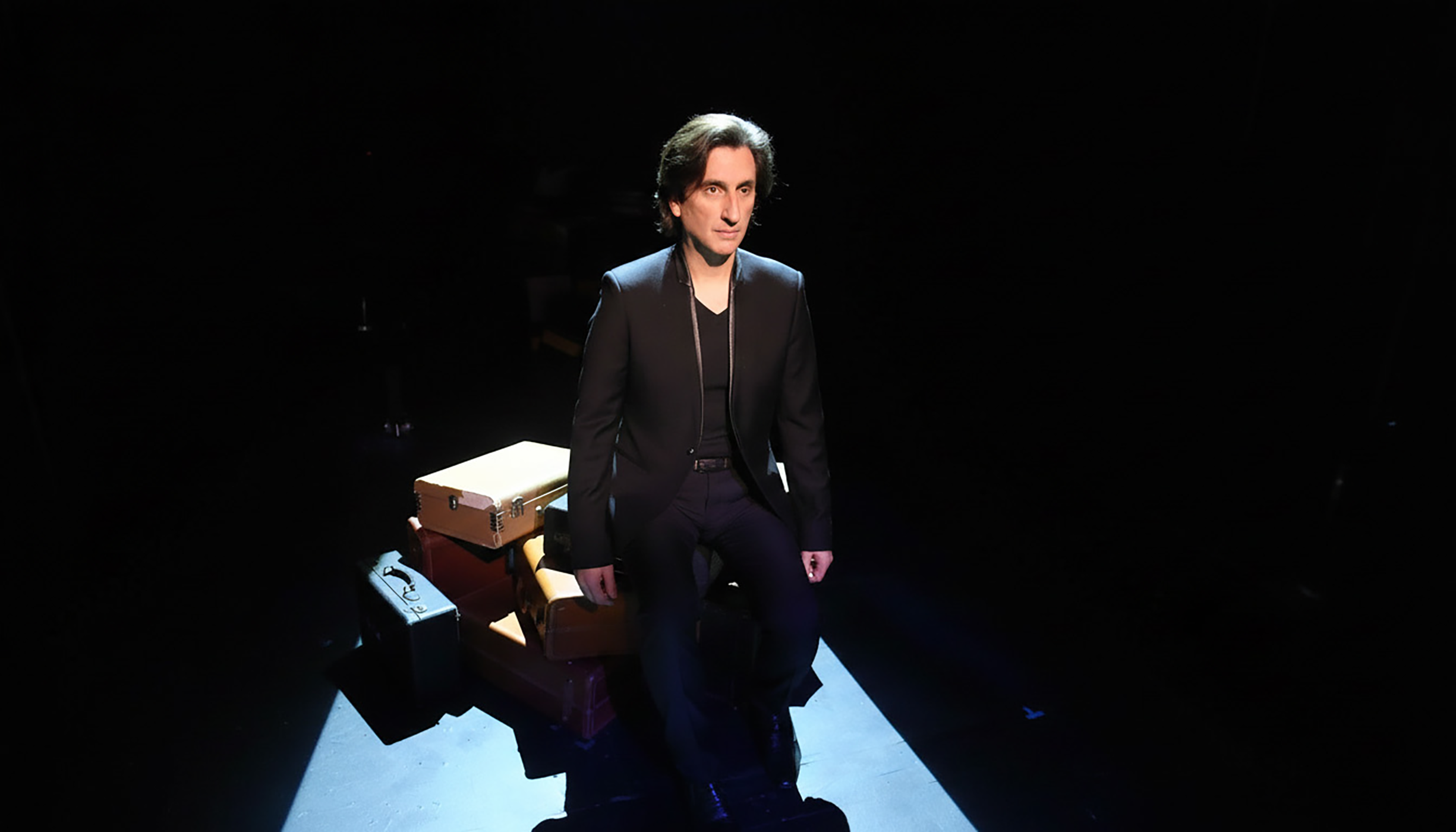
Hershey Felder. Photo by David Lepori
Talent and ambition take Felder to McGill University, then the halls of Juilliard, where his renowned piano instructor Jerome Lowenthal “unscrewed all he had learned and helped him screw it back together.” Lowenthal introduces Felder to Gershwin’s “Rhapsody in Blue,” sparking a flame in the budding artist. Gershwin’s music resonates powerfully with immigrants in America.
When Steven Spielberg’s Shoah Foundation hires the young Felder to interview Holocaust survivors, his time in Germany proves transformative. Felder interviews an elderly man who relates his story as a young boy in Auschwitz: the Nazis made him whistle “Rhapsody in Blue” in the death camp to save his own life! This wheelchair bound survivor also shares a ghastly tale about meeting the “Angel of Death,” the monstrous Nazi Dr. Mengele.
The survivor’s powerful story inspires Felder to create his signature one man show, “George Gershwin Alone”—the beginning of Felder’s original artistic vision.
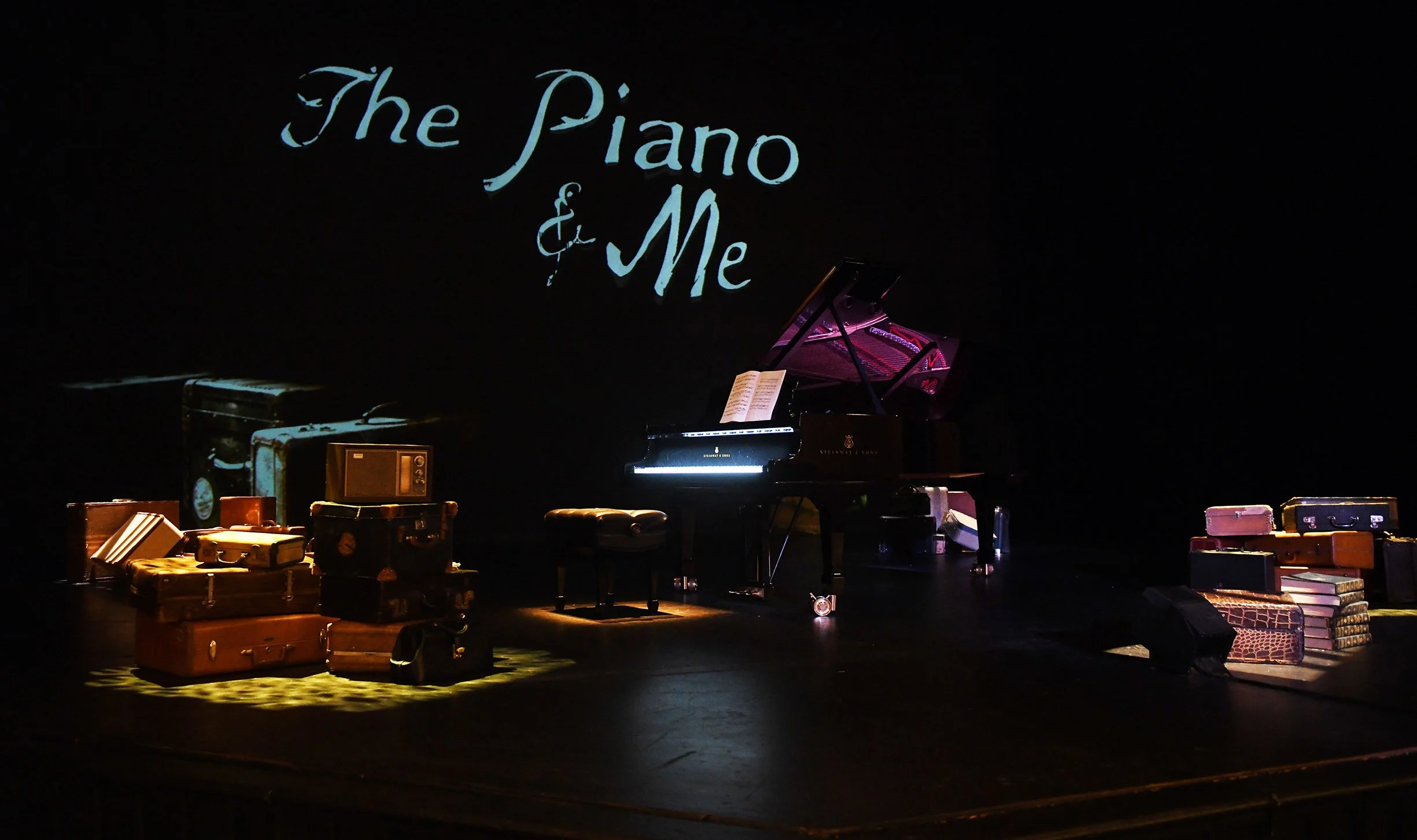
Photo by David Lepori
The brilliance and generosity of Felder’s own immigrant story, “The Piano & Me,” contains both dire warnings and messages of hope.
Thank you, bless you, Hershey Supreme!
“The Piano & Me: A new play with music” —book by Hershey Felder, with music by Bach, Mozart, Beethoven, Chopin, Bartok, Liszt, Rachmaninoff, Gershwin, and Williams, Sound Design by Erik Carstensen, Lighting Design by Erik S. Barry, Video/Projection Design by Stephano DeCarli—at TheatreWorks Silicon Valley, Mountain View, California.
Info: theatreworks.org – to February 8, 2026.
Cast: Hershey Felder